

Bike: 2012 Kona Satori
Size Tested: 18”
Weight (with pedals): around 31.5 lbs.
Intended Use: That’s a bit up in the air. Presumably all-around trail slayage.
Test Locations: A few rides around Winter Park, Colorado, and then a couple more in Whitefish, Montana. Trails were mostly XC-ish, but ranged from loose gravel to hardpack to loam.
Rider: 5’9” 150 lbs. Prefers trails that are downhill both ways.
Days on the bike: 5
The build: Stock as it comes from Kona. Rockshox Revelation RLT w/ 140mm travel, Fox Float RP23 Rear Shock giving 130mm travel, Easton Vice wheels, X9 / X7 derailleurs and shifters, Maxxis Ardent tires, various Kona branded parts (bar / stem / seatpost)
MSRP: $3099
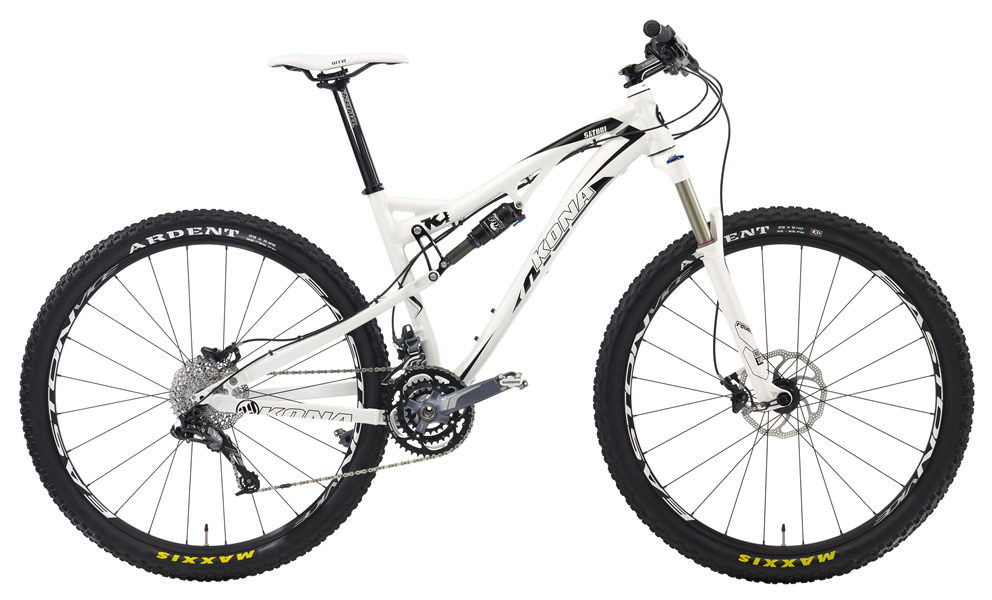
Due to a little snafu (read: “injury”), I didn’t get to spend as much time on the Satori as I’d hoped, but I still got a general sense of what the bike was about, and BLISTER reviewer Joe Hanrahan is currently riding and working on a follow up review to this one.
Intro, Specs, and Stats
The Satori is Kona’s attempt to make an aggressive 29er trail bike (like the Kona Honzo) but in a full suspension package. The recent trend in 29ers has been to cater to trail riders who are looking for a bike that has the climbing and rolling benefits of the larger wheelsize, but in a package that can hang with its 26” brethren on the descents. Personally, this is what I look for in a 29er, and it’s what I was hoping to find in the Satori.
To a large extent, the Satori achieves this goal. It has a fairly slack 68-degree head angle, a relatively low 13.3” bottom bracket, and short 17.3” chainstays (not bad for a bike with 130mm of travel). By the numbers, the Satori should be a bunch of fun on the trail, and in certain situations, it was really fun; in other situations, however, it felt a bit confused.
The Satori’s cockpit is spec’d more or less like a trail-friendly cross-country bike: it has a long-ish 90mm stem, narrow (by modern standards) handlebars, and a non-dropper seatpost (that doesn’t have a quick release, much to my disappointment). All of these parts make it less enjoyable on the downhill, and they’re probably things that I would look to swap out. But at the same time, if I was looking for a bike to do a four-hour climb, this isn’t the bike I’d be looking at, which is why I’m a little confused as to what the target market for this bike is.
While they tell me I shouldn’t judge a book by its cover, first impressions often prove to be true, and my first impression of the Satori is that it’s a really big bike. My test Satori was an 18”, and at 5’9”, I feel that’s the right size for me. I’ve owned Konas in the past and have always ridden an 18”.
If anything, I would have liked the 23.5” top tube to be slightly longer so that I could comfortably run a shorter stem (ideally, I’d run a 70mm on a bike like this). In other words, it’s not the fit of the bike that made it feel enormous, it’s the simple fact that when you put large wheels on a longer travel bike with a slack headtube angle, you end up with a lot of bike.
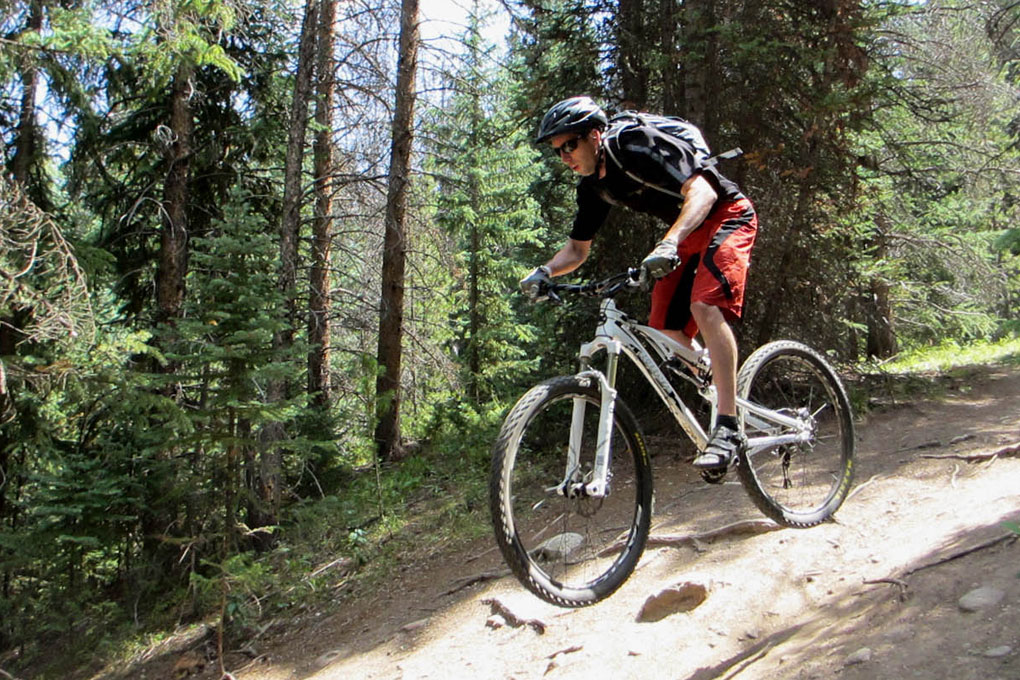
The Satori has a wheelbase of around 45.5”, which is quite long. For reference, my medium Trek Session 88 downhill bike has a wheelbase of around 46”, while my medium Canfield Yelli Screamy 29er hardtail has a wheelbase of around 43”. The upside of the Satori having a wheelbase akin to a downhill bike is that it has the stability of a monster truck. Mated with the big wheels, you can plunder straight down nasty descents without blinking an eye.
NEXT: CORNERING
Where is the other dudes follow up review? I want to read it