

[Editor’s Note: We posted this article by Charlie Bradley last fall, and if you missed it back then, you don’t want to miss it now.]
We’re at the start of the 2012/13 season, so it’s a good time to be thinking about boots again. I ended my Boot Fitting 101 article promising to talk about boot sole lengths and how to make the boot your own, so we’ll pick up there.
When I started boot fitting in the mid eighties, the lengths of the boot soles were much shorter than they are today. For example, 15 to 20 years ago, a size 27/27.5 shell measured 310-312mm. That same size today will measure 316-320mm! Mondo sizing—the distance from the back of your heel to the end of your longest toe, measured in centimeters—was almost unheard of. So why the change?
In Boot Fitting 101, I talked about how a ski boot should fit suspiciously snug. The biggest problem with the boot fitting problem is that the boot often feels too short to the customer out of the box. (As true as this is today, imagine what it was like 25 years ago when boots were ~7mm shorter.) Boot manufacturers started making their boots longer to try to mitigate the problem of constantly hearing, “this boot is too short.”
So how does a new (or even experienced) boot buyer and boot fitter actually know what size they are getting? One simple rule of thumb is to subtract 40mm from the boot sole length. Why 40mm? This is the combined measurement of the toe and heel lugs of the boot. So, for example, if you’ve got a 315mm boot sole length, you subtract 40 to get 275. Divide by 10, and you’ve got your Mondo length: 27.5.
However, while this calculation will help you arrive at your Mondo length, it’s most helpful just to know your boot sole length. (I can’t stress this enough.) If you know your boot sole length (BSL) number—assuming it’s coming from a correctly sized boot (again, see the Boot Fitting 101 article)—you’ll know what size boot you’ll need when you begin to try on boots from various manufacturers.
Boot sole length is always stamped onto the heel lug. Memorize this number.
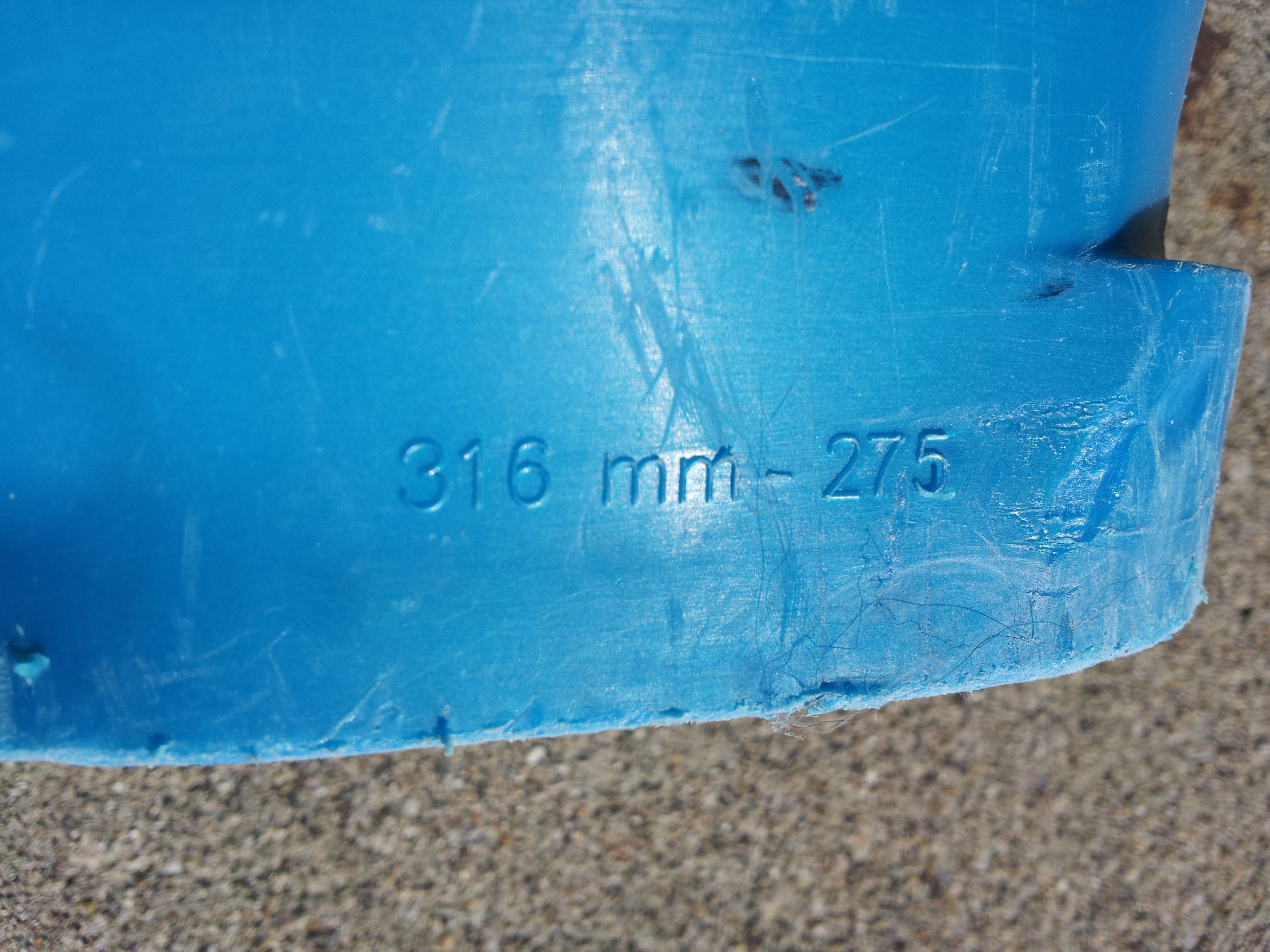
Most boots are stamped and are accurate to within 1 or 2mm. Do the math and when you find what you think is the correct size, shell size yourself. Or just go to a qualified fitter and he or she can do all the dirty work for you.
Making The Boot Your Own
Once you have found the right size and the right shape, now what? Are you ready to ski? Most people would think so, especially those who are relatively new to the sport. But there are still some things you can do to enhance fit and improve performance. The first thing is to get a custom foot bed.
A custom foot bed finishes the fit of your boot. It creates a foundation that mirrors the shape of the bottom of your foot that not only stabilizes the foot but transfers maximum force to the edge of the ski.
Now, I’m not talking about one of those “off the shelf,” “trim to fit,” pre-formed foot beds that so many shops are fond of pushing because it is an easy $40 sale. I’m talking about a truly customizable insole, one that is actually molded to your foot!
There are a number of these types of foot beds on the market, and what you buy will depends on what your shop sells. The most important thing with a custom foot bed is not that you get the right brand, but that you get the right type of foot bed. An experienced boot fitter should be able to recommend an insole for you based on a couple of different criteria.
• Dorsiflexion
• Windlass action
• Forefoot mobility
Dorsiflexion is the ability to bend or close the ankle joint. In general, the more flexible you are in the ankle joint, the more supportive a foot bed you’ll need. Conversely, the more rigid you are in the ankle joint, the more flexible (or shock absorbing) the footbed should be. Here are examples of limited (or rigid) dorsiflexion, and excessive (or flexible) dorsiflexion.


I have a set of really well fitting (custom punched with custom cork insoles) resort ski boots (Tecnica Diablos) but my AT boots (BD Factors) just don’t offer the same level of precision. Do you suggest using the same fitting techniques for AT boots, or does precision have to be compromised for the sake of tourability?
I know it’s sort of an apples to oranges comparison (The “90 Flex” Tecnicas are about a pound heavier and quite a bit stiffer than the “130 Flex” BD’s) but the shells on both boots have a good fit and I’d like the ski feel, if not the flex to match (but not at the expense of tourability).
Well, you are right. It is apples to oranges. I have a hard time believing that the Diablo 90 is stiffer than the Factor. The only diablo 90 I remember is the junior race boot. Is that the boot you are in? Anyway, that aside, it has been my experience that A/T boots do not perform the same as pure alpine boots. if they did you would see more skiers using them on lift served terrain.
To get to your question of fitting techniques i would say yes. An A/T boot should fit as well as any alpine boot. You should have a custom footbed in them as well. I do some back country skiing (not necessarily touring) and I use my alpine boots because I like the precision and durability. That’s not to say that A/T boots are not durable but I have had to repair or replace failed parts on them.
The biggest difference between Alpine and A/T boots is the mechanism that unlocks the cuff. This in itself changes how a boot flexes/performs. The alpine boot has four bolts that hold the cuff to the lower shell. It has a spine that is not compromised by a locking mechanism. The lateral rigidity is superior because of this. Most skiers who use A/T boots do so because of the “walk/hike-ability”. They prefer the articulating cuff when getting out to terrain that can only be accessed by skinning or hiking. Do you sacrifice performance for this? I believe you do. I have not yet come across a boot that is a master of both pure alpine skiing and touring. That is why I skin in my Lange RX 130.
Hi Charlie,
great articles!! I too have the lange rx 130 boot, best fitting boot out of the box ever for me
I plan on doing some backcountry next season with an A/T binding. Which bindings will work with these boots? advice appreciated regards Greg
Thanks for the input. To clarify, my resort boots are 2008 Tecnica Diablo Flame Hotform boots in a 26/26.5 shell size. The stiffer spine may explain the difference, but I’ll try custom insoles (and maybe a real Booster strap) on the BD’s once there’s enough snow to make some turns and see if that helps.
I bought a pair of boots that fit right in the store but after 2 months of skiing they were killing my ankles.
Do I wear thicker socks?
no boot “should take a few days of painful break in”. The ankle issue can stem from a couple different issues. The boot may be too big or the wrong shape for the foot. Did you buy a custom footbed? Could be limited dorsiflexion or hyper dorsiflexion. Could be pronation. A qualified boot fitter can best determine what the issue is a come up with the proper solution. Thicker socks is never the answer. Take your boots to a boot fitter!
Or replace the liners with Intuitions and size down next time you buy boots. They should take a few days of painful break in if you want them to ski well for a while.
Thanks for this fantastic resource. The 101 and 201 articles are very useful. My last purchase was in the mid-80s: Koflach boots (yeah, right…Kof-who??), Kästle 205cm racing skis, Marker race bindings set to DIN 15. Real piste-warrior stuff. It’s all changed now, much more scientific, but quite confusing. I have spent many hours reading bits and pieces from dozens of sites, but up until now couldn’t find a single, concise, clearly laid-out explanation of all the main variables in boot and ski selection. Congratulations.
I’ve recently purchased some Tecnica Diablo Pro 130s for on-piste and Tecnica Bushwackers for back country. My 1980s knowledge, careful discussions with shop fitting staff and some web research led me to these two boots. I’ve tried on all the major brands and for some reason the Tecnicas always fit my feet best. Extremely snug but with wiggle room for my rather long big toe.
Next step is skis. I’m 180cm, 83kg, at the age of 50 I’m not the aggressive mogul-hopper I used to be but I can still carve it up if the need arises. I only want to buy one pair, mainly for groomed expert runs and some mogul work. Brand loyalty leads me back to Kästle and I’m looking at some MX88s in a 178 or 188 length. Any thoughts or alternative suggestions? Bindings?
How about some mention of width when doing a shell fit? I was taught to move foot all the way to the outer part of the boot (right on right boot, left on left boot) and look for about a finger’s width (super general, I know, maybe 10-15mm?) between the edge of the foot and the shell. Wider and you have too loose of a fit, narrower and you’re squeezing toes and pinning the heel down so it can’t have proper flexion. What say you to that?
As a boot fitter its is always a good idea to check shell width if u are unsure of how a particular boot fits. I find that knowing my inventory allows me to skip certain sizing techniques but have used that particular one as well as shell sizing for length to reassure the customer.
I have a “knot” on the outside of my little toe from where I possibly broke it.
Is there a way to carve out or grind out just a little to keep my little toe from hurting after day 3 of skiing?
Yes, any reputable boot fitting shop should have the proper tools and and experience to do any type of grind or stretch to give u more room in the affected area.
Hey, I have a pair of Nordica 295 mm boots, so they’re 25.4 Mondo. I measured my feet & they’re 22mm. So do I have too big of boots, or are they good?? Just getting into the skiing game & trying to learn everything I can – thanks for the article.
Yes your boots are too big based on the length measurement of your foot. If however your instep to heel measurement is 25.5 then the boot may be the right size. I just had a customer yesterday who’s foot measured 26.5 in length but I wound up selling him a 29.5 because his instep was so high! His instep to heel measured 28.5!
With this in mind, how far can you buckle the two lower buckles? If you can crank thee two buckles down over your foot and not cause discomfort then the boot is probably too big! Remember, a boot that fits properly does NOT need to be buckled (lower buckles) to ski in it.
Charlie, can you explain how you measured instep-to-heel? I have the same issue the customer you mentioned does.
Put the customers foot on the brannock. Take a flexible tape measure preferably cloth and hold one end at the corner of the heel cup and pull tape over instep to other corner. Voilà
Great articles, Charlie–thanks so much for taking the time. Quick question: I’ve got feet that are about one street shoe size in difference (9.5US and 10.5US), with the bigger one having a flatter arch. Any advice on sizing a new pair of ski boots? I know there’s probably no easy answer, but just wanted to get your opinion…thanks!
To answer your question as simply as possible, you have to ask yourself what your goal is: comfort or performance? If comfort is the goal, then size to your bigger foot. If it’s performance you are looking for, then size to the smaller foot. Have your feet measured with a mondo point measuring device, Do not use your shoe size! This is the biggest mistake people make. It may very well be that your feet fall within the same shell size. Always try the smaller size just to make sure it is or is not the right size, and please go to a reputable shop. And remember that the shape of the shell is always important to how a boot fits. And finally, a custom insole can make a huge difference in what size will work best. Good luck! Ski fast and leave a narrow track!
Hello,
Thanks for an enlightening article! One question though, should I get myself a pair of custom foot beds that I take with me to the shop, so I can find boots that fit me well with the custom foot beds, or should the foot beds be bought after I have bought my dream boot to be customized to fit this particular boot?
I’m sure a professional boot fitter would answer this question, when I go to the store asking to try new boots, but I’m afraid there are very few – if any – professional boot fitters here in Finland.
Thanks a lot!
Mikael
Great articles. I have a question. I’m moving to Denver this winter and wanted to get my gear in advance. I went to the only ski shop this town has and tried on a couple of boots and found out I needed a 27.5 and not a 28.5 like I thought, according to the sales guy. I liked the Rossignol synergy sensor 2 90 the best, but it wasn’t the boot I wanted. The fit was fine and my foot went in with no problem, but I haven’t skied in almost 20 years and thought the boot was a bit advanced for me. So, after looking around I bought a pair of Rossignol synergy sensor 2 80 boots online. Yes I know better. Here is the problem, getting the boots on is literally an effort that takes a couple of minutes for each boot with no socks on. They are new and unused. However, once the boots are on they feel like they are molded to my feet and I love them. Only problem is getting them to where I can get them on with socks on without wearing myself out for the day. Any suggestions?
First of all you need to have a proper sock. A very thin wool (smartwool or the like) sock. The Bridgedale ultralight is probably the thinnest ski sock. Trying to put a ski boot on bare foot is way more difficult than with a socked foot. The rossignol sensor 2 80 should not be that difficult to put on as it is only an 80 flex. Which brings me to technique. If I had a nickel for every time I had to show someone how to put on a boot I could probably pay my cell phone bill. What you don’t want to do is pull the tongue up and or forward as this does NOT spread the throat of the boot. What you want to do do is use the tongue as a lever against either the inside(medial) or outside(lateral) aspect of the cuff with one hand while pushing the opposite aspect with the other hand. Oh, and never, ever use cotton socks. Cotton socks retain moisture and they love to stick to the liner material making the on/off process much more difficult.
Charlie you are awesome. I actually tried to get the boots on with the thinnest socks I own which were medium weight hiking socks. I’m currently waiting for 4 different pair of smartwool ski socks to arrive in the mail. It wasn’t the sock or lack of a sock that I was having a problem with. I was actually moving the tongue from side to side pulling it slightly away from my leg to try to get more room to get the boots on, but my foot wasn’t going in which is why I tried it with no socks and finally got the boots on after at least five to six minutes. I was afraid of damaging my boots if I tried to separate the overlap of plastic at the throat. Using the technique you just described I put on my medium weight hiking socks again and used the tongue and my hand to pull apart the throat and my foot slid right in. Had both boots on in under a minute. The fit is too tight with the medium weight socks, but I figure once I use a real ultra light ski sock (Smartwool) and my boot starts to pack some the fit will be perfect. Thank you so much for the information and the fact that you take the time to help people like myself. If only you lived in the Denver area I would come to you for all my ski needs no matter what the cost. You are an awesome person. Thanks again!
Charlie:
I am looking to buy new boots this fall. Is there a boot fitter in Denver that you would recommend in the area that would have this knowledge? Thanks
Hi, Byron – for the Denver area, our recommendation would be to head up to Larry’s Boot & Ski in Boulder.
Hi:
I’m looking to buy new books in the Olympia Washington area (or worst case scenario, the Tacoma/Seattle area). Is there a boot fitter you would recommend?
Thanks!
I have been thinking of going with a more customized boot setup, and have been looking into Daleboots in your how turf of SLC. I can find very little written about them, reviews, comments, whatever. Do you have any opinions about their custom boots, which seem to be priced very well, basically the same price as good off the shelf boots. Any help appreciated! I will be spending all of Feb. trying to ski the hell out of Alta–at least to the degree my 52 year old body still can!
I actually have a pair of dale boots. Dale boot built a pair for me for the ski magazine boot tests. My first impression was a good one. I only skied two runs in them at that time (too many boots to test so little time). I will be skiing them again very soon in order to write a review of them. The fit process is unique, If you contact dale boot you can get a form to fill out. It will you ask you for several measurements from the calf, lower leg, instep/heel length and width and a trace of your foot. With those measurements they will construct the boot. Add a intuition liner and ouila! You have a boot built specifically to your foot. They will also ask for your you flex preference. Like i said the boot performed well.
Happy skiing! ;-)
My boot fits great except for pain/pressure on the bottom of my heels. (heel sole). Especially when I put extra weight on the heels. I don’ t understand what could be causing this type of pain in both feet. When I remove the boot after about 40 mins, the rear portion of the heel sole is numb. Any ideas as to why this is happening?
Thanks
What boots do you have? What kind of liner? Do you have custom footbeds?
Hi Charlie, fantastic articles! I’m finally getting back into the sport after a 20 year hiatus. Lots has changed and want to buy a new pair of boots for next season–but done right. I have a couple questions if you don’t mind:
– What’s the best time of year to buy boots where there’s still enough selection and prices are good? I ask, because I’ll be traveling to Denver for 4th of July (from Chicago) and thought perhaps that would be a good time to get some off-season pricing and visit a skilled bootfitter (there’s not much around Chicago). But I’m concerned about stock selection.
– Having said that, do you know of anyone worth recommending in the Midwest if other times of year work best? is June/July actually a bad time?
I’m concerned about selection because I have a pretty wide forefoot (duck-feet shaped) of about 105+mm, with long ankles, lots of windlass action, and fat calves. I consider myself a intermediate/advanced skier, and selection seems to be small for my needs.
Any thoughts? Thanks again!
Hi Andres,
Buying boots off season for the sake of saving money is a crap shoot. Getting to a qualified boot fitter and spending your money to get the RIGHT boot is money well spent. The best selection is always at the beginning of the season, when nothing is on sale. Rest assured that your boot fitter will have the highest success in choosing the right brand and model for you at the beginning of the season not the end. That said, it’s not impossible to find a boot that will work for you in the off season. But settling for a boot because it’s a “deal” may not be a deal come the middle of ski season.
For the Denver area, Blister recommends Larry’s Boot Fitting in Boulder, CO.
I have a new pair of Diablo ski boots that feel great once I get my feet in them. My problem, they are IMPOSSIBLE to get on and off by myself. It’s quite embarrassing but I have to go to the ski rental shop and ask one of the workers to help me get in and out of my boot each time I go skiing. Many times my foot gets stuck and I get a serious cramp getting in and out of the boot. I made the biggest mistake of not putting them on myself when I purchased them in the ski shop. I let the guy selling me the boot get it ready and hold it open for me to slip in. Can I do anything to make them less stiff? Even the people who have helped me commented on how difficult they are to pull open. Any suggestions is greatly appreciated.
Audrey
Hi Audrey
First of all which boot do you have? The tecnica Diablo and the Dalbello are often confused. Diablo is a boot model made by tecnica. Dalbello is a brand unto itself. If it is a Dalbello, which model is it? Is it a two piece shell or three piece? Here is a link to a video of how to put ski boots on. Give it a look and if you are still having trouble let me know.
Cheers
https://www.youtube.com/watch?v=i7gTzb_tecU&feature=youtube_gdata_player
Hi Charlie. As much as I would love to go visit your shop I’m kind of stuck here in Chicago. We have a local shop here, Viking Ski Shop (pretty much the only guys in town), that their guys are ABB certified. The info in your two articles was really informative as to the process and steps for bootfitting! Went to visit them yesterday to have a look and they seem to follow a thorough process and have the machines to do custom insoles, heat molding of liners and shells, etc.
Question: Do you have any recommendations on how to evaluate a bootfitter before shelling a ton of cash on a good boot? Sort of some tips on how to qualify (or disqualify) someone, what to look for, etc. Also, silly question, at what point do you go from just narrowing down selection to commiting to purchasing a boot? Is it when you start making adjustements (punching, grinding, etc)? If it doesn’t work out, can you back out of the purchase? Seems like an a-hole move to have them “destroy” the boot to then not buy it. Sorry for the noob questions, know you guys are experts around here.
I want to get myself in a great fitting boot, something that works for me, and I could do that now while they still have enough stock, or otherwise I’ll have to wait to July when I’ll be in the Denver area, but as mentioned above, selection may be less? Anyway, thanks a ton for your info and always being so responsive to us!
Qualifying a bootfitter can be difficult. First thing I suppose is how well does he listen. It’s my opinion that a good bootfitter will put you in the proper boot in a minimum amount of time. I don’t believe in trying every boot in the store. That’s what big box stores are for. He should be able to tell you why he chose the boot he did. He should also be able to spot fit issues, both structural and biomechanical without prompting from you. As far as modifications to the boot goes, they are always performed after you have made the purchase.
You should be comfortable with the boot choice you make based on the information provided by the fitter as well as how it feels on your foot. If the fitter has showed competence in choosing the right boot and has the proper tools in the shop then making the correct modifications should not be a problem.
When you find the boot you like don’t forget to try the same boot one size smaller to make sure you are getting the proper hold on the foot. Read this if you haven’t already, http://blistergearreview.com/gear-101/boot-fitting-101/fit-issues-and-myths.
I hope this helps.
Cheers
Thank you so much for replying! You really know about ski boots! I was wrong about the brand I own…they are indeed Dalbello boots “Mantis 8”. I’m not sure how to tell if they are a two piece shell or 3 piece? I will check the link you provided.
Audrey
I saw the video. It was helpful. Unfortunately my Dalbello Mantis 8 boots are so stiff that I don’t have the strength to open them up wide enough nor keep the shell open long enough to get my foot in! Will the plastic shell loosen up over time? They are brand new boots but I don’t think I could even re-sale them-no other woman will be able to get in and out of them as well!
Audrey
The plastic shell will never get “looser”. I suggest getting a four buckle overlap boot. You will be much happier.
The 3 piece shell has a ribbed tongue that hinges forward. A 2 piece shell is a traditional overlap design with four buckles.
Thanks Charlie!
My boots are a 3 piece shell.
Audrey
If I may make a suggestion, get an overlap 4 buckle boot. You will be happier.
A perhaps naive question: I understand that foot vol. is crucial, and that if the proportion of ones foot length to vol. is unusual, you may well have to go to a longer shell to accommodate vol. But why does that not just result in a boot that is too long, but of the correct vol.? Is the point that it is possible to shorten the boot with liner choice and the like, once you have the vol. correct? A related point–do not buckles, in a sense, modify the boots volume? If so, would more sophisticated buckling systems (bolo style perhaps?) allow for greater variation in volume for any given boot length?
The crucial fit zone is heel to instep. As long as this zone fits correctly the length is a non issue. Remember that it is an unusual circumstance that you go larger than the measured size to accommodate extraordinarily high volume. I see this circumstance maybe 3 times a season. Using the buckles to fit the boot in the case of the low volume foot or any foot for that matter is, in my opinion not the best thought process. The shoe or clog should wrap and hold the foot without buckling. The buckles are there to hold the shell closed. A boot that fits well doesn’t need to be buckled to ski well. Using a different size liner doesn’t work either. A 27 liner fits a 27 shell. Its the shell that holds the foot not the liner.
I measure 29 length and 29 heel/instep and I have always skied in 27 shell. If I try to ski in a 28 or 29 I have to over buckle the boot which distorts the shell and it becomes uncomfortable. I can ski a 27 comfortably without buckling. I would never push this kind of fit on anyone but if the situation warranted trying a boot 2 sizes smaller I would do it and let the customer decide.
We have to think in terms of shell tension not buckle tension. If I see a customer cranking the lower buckles out of the box the boot is obviously too big. The buckles should really only be used to snug the boot as the liner breaks down over time.
I hope this answers your questions.
Cheers
Hi Charlie,
wasn’t sure how forum worked this post appears further back as well
great articles!! I too have the lange rx 130 boot, best fitting boot out of the box ever for me
I plan on doing some backcountry next season with an A/T binding. Which bindings will work with these boots? advice appreciated regards Greg
Pretty much all a/t bindings will work except dynafit. I use the look xm. I have used marker dukes as well as silveretta. The fritchie freeride is another.
Great article. Leaving you to respond on this forum for years to come… :-)
Couple of questions, if you can find the time. I have always had tough time finding The Right Boots. I have very wide feet (Double or triple E), plus bunions (from a season in poor fitting boots back in the day), plus a high arch and instep. So question #1 is what boot makers/ boots (expert freeride style) making boots for those as generously endowed as myself? I ski in the Alps, in area-ish but always off-piste, and ski with a beefy AT setup (Marker Dukes and Salomon Quest 14), but in truth I end up doing minimal skinning, and could probably sneak by in an accommodating alpine boot. And while the Quest 14 is alright, an extra buckle wouldn’t go amiss, and I have wondered (question #2) if I couldn’t get more performance for less money from the right alpine boot, and still be able to happily skin a kilometer or two without excessive suffering.
Thanks in advance!
Dear Brian,
Try Schuhhaus Sander Schruns Austria. They are very good. Call before you go to make an appointment because they are very busy and they really take the time for you.
Happy Pow.
Alex.
Alex,
Just saw this. Thanks for the beta! It won’t be easy to get there, but I’m sure to find things to do to make an excuse (assuming it snows this winter) and honestly; paying the price of a pair of boots to get the RIGHT boots is something we all have done at some point anyway. And I would prefer to pay to have have expert advice than trial by error anyway. Even if I don’t realize it on that day…
Cheers!
B
Charlie, great articles… My question is with Atomic and their sizing over the last few years. I was put into an Atomic Hawk boot 11/12…loved the boot, but it leaked. I went back to the dealer at the end of that year (ski year) and I was put into the next years boot 13/14 as a replacement to that boot that was leaking. I skied on the boot all last year, it was great though I lost both big toenails.
Both boots were the same size and the same boot, though some of the research I have done is leaning to Atomic moving away from the sizing that has been used. In short, the 11/12 boot was a 25.5 and the 13/14 was as well, but was obviously way too snug!! is there any truth to the sizing change essentially making my 25.5 of 13/14 a 24.5 shell?
Thanks for any help on this.
I have not seen any evidence of atomic or any other boot company changing the sizing scheme. If anything, boot companies are making their boots larger. A typical 25.5 will have a boot sole length around 296mm. Some models are actually 300mm. What does your boot say? The Hawx should be 296mm. It should be stamped at the heel of the boot. As for losing toe nails, this usually occurs when a boot is too big. It is a sudden impact injury. If the foot is not held securely, then the potential to slide forward and hit the front is increased. The cases of toe nail injury I have seen, 9.9 times out of 10, the boots were too big. Check the boot sole length.
A very informative article Charlie, thank you.
I have a question regarding custom footbeds. I have pancake flat feet (with quite marked pronation). Would a custom footbed which just mirrors my flat feet help ? What would a custom footbed offer over a Superfeet insole which is what I use now ? The Superfeet seem to do a good job of correcting my pronation (although I have never used a custom footbed before so I don’t really know what I am missing, if anything).
thanks
Ian
it really just depends on how rigid your flat foot is. Is it flat because of the pronation? Or is it structurally flat. The pronated foot can be supported, the rigid flat foot cannot. Off the shelf trim to fit insoles can offer some support from the heel through the arch but there is no accommodation for forefoot flexibility. Extremely flexible (pronated) feet often need some sort of forefoot support. As for the difference between custom foot beds and inexpensive trim to fit types, everyone is different. Custom foot beds are built for YOUR feet. You can’t get the same feel and performance from trim to fit insoles.
Thanks Charlie. I am pretty sure that my feet are structurally flat although I do have pronation as well.
Would you be able to recommend a good boot fitter in Whistler at all ?
thanks very much
Ian
Give Barry Allison @ Ski Connexions in Whistler village a try
Thank you Charlie.
Hi Charlie
I am in a new pair of Salomon Quest Max BC 120s and the fit feels pretty good as does the flex. I have one big problem which I believe is known as shin bite. When I flex the boot forward, my shins (particularly my left one) hurts to the point that on hard bumpy terrain, my shins are so sore that I struggle to ski at all. At the end of the skiing day, the lower part of my shins are red and sore.
I never had this problem with my previous boots, the Lange RS 120 so I don’t think stiffness is an issue. My shell size is largely unchanged (285mm on the Salomons vs 286mm on the Lange).
At the suggestion of the bootfitter, I have tried the Eliminator tongue in my boots and it improved things somewhat in my right boot but did not help very much with my left. It almost feels like there is a hinge point in my tongue such that when I flex the boot beyond a certain point, it starts hurting which eases off as soon as I take the pressure off it.
I am hoping you can give me some suggestions on how to deal with this problem.
thanks very much
Ian
Well, two things come to mind. Either you have a very skinny lower leg and/or the Salomon’s are two soft. Being a quest (I haven’t seen the bc) I’m sure it has a walk hike mode which doesn’t compare at all in flex to a riveted shell (rs120). The Salomon only has one buckle on the cuff, a flaw in my opinion. So the Salomon is free flexing with a hinge point which is probably the biggest culprit. Also the fact that you had no problem with the Lange supports this. The Lange also accommodates thinner lower leg better. Shin bang is one of the most difficult problems to resolve. If it ain’t broke don’t fix it, go back to the Lange.
Thanks Charlie. I seem to have found the issue. I had put the instep buckle in the position closest to my shin and that seemed to have caused the hinge pressure point when I flexed the boot. I moved it back to the default middle position and things are much improved. It’s amazing how a little thing like that can make such a difference. The salomon is softer than an rs120 but I find that it’s still a pretty solid boot in terms of flex and there is discernible (at least to me) play in the flex from the walk/hike mode when it’s in the ski position.
Hi Charlie –
Great article, some nice tips. To cut to the chase I’m returning to the slopes this season after a 10 year break (3 kids, oldest now 10 unsurpisingly!) and have just had some Salamon X Pro 100’s fitted at well know UK retailer. Was toying between these and the Salamon Quest Pro 110’s (after also trying Dabello’s Panterra 100’s and Rossignol Alltrack 120’s) and initially found the Quest’s much more comfortable in a ‘slipper’ like way. The X Pro’s however had a more familiar fit in terms of stiffness and overall ‘snuggness’ as well as holding my heel a bit more effectively so made a choice and had the liners heated etc. Prior to this I tried inserting a couple of off the shelf insoles (Superfeet blue & Carbon) however they made little / no difference in terms of retention/comfort so I stuck with the standard insoles. Bought the boots and went home happy . . . . . .
However I’ve been putting them on for the last few nights after work (as per your vid) and flexing forward whilst watching the box etc. Boot size is 28.5 to match my mondo sizing, instep size matches length, width of feet differs 103 on the left and 105 on the right (I also have an un-painful bunion on this foot)
Top buckles and strap are snug but not over tight (2nd ratchet) and the toe buckles are set very light (can flick them over with my little finger) – both boots have the same buckle set up. . . .
The result? Boots feel great for 5-10 mins then suddenly the left boot specifically feels uncomfortable and my circulation starts to feel restricted and creates an all over pain in the leg/calf – the right boot feels fine. I can wiggle my toes in both boots – heel lift is minimal . . .also weird that the wider/bunion foot is the more comfortable. Boots shells were not moulded in store . . . . . .HELP! Got 4 weeks to go and want to make the most of my trip . . . Cheers Chris
It’s difficult to say what’s happening as I can’t do my usual bio-mechanical assessments. It sounds to me like there is a dorsi-flexion issue in the problematic boot. It doesn’t have to be much to cause a problem. Any extra tension in the calf muscle can be very uncomfortable after just a few minutes in a ski boot. Go back to shop and have them install a xx (7mm) heel lift in both boots. Also, I don’t recommend trim-to-fit off-the-shelf insoles. You’re investing a bit of cash and time in your boots, get a custom foot bed!
Hi Charlie –
Thanks for your reply . . .to be honest I hadn’t checked your feedback before I went straight back to the bootfitter . . this time the ‘older’ guy (the boss) checked my fit and did indeed recommend heel lifts and a custom footbed . . .he also put pads around some pressure points as well (outside right little toe and both flex points (bottom of the cuffs) and heated the shells etc. (10/10 for your analysis!)
Confidence restored, (although still feeling very slightly compromised on the right boot) I walk away happy in that someone has sorted me out. . . .. however
Went skiing for 3 hours on a indoor slope this evening . .boots felt fine on – two ‘runs’ in and the left ‘problem’ boot (pre remould/footbed/heel lift) starts feeling constricted. Another couple of runs and its uncomfortable and the circulation feeling comes back in spades . .! Right foot however remains a dream – solid/planted/dialed in feeling – didn’t even notice I had a ski boot on . . .
I unclipped the boot and waited 5 for my circulation to return, then redid the buckles but as couple of clicks looser than the right boot. Initially felt weird but did alleviate the circulation problem a little bit, well when skiing at any rate – 2.5hrs later this feeling had subsided again but the boot in no way matched the ‘dialed in’ feeling of the right boot . . .FYI when on the conveyor belt lift I felt my toes in the left boot curl up/crunch when telemarking . .
Q – Am I just breaking this boot in or do you think I should revisit the fitter again? I’ve got two weeks before I go skiing – could the heel lift not be high enough? The constricted feeling starts at the arch and spreads around the ankle / lower calf . . . .as mentioned the right boot remains an erotic dream . . .HELP!
Cheers Chris
Thanks for your excellent articles. My Nordica ski boots are a 25.5. What size socks would you recommend? Thanks, Paul
Help! After many ski days of pain due to developed bunions and 12 year old boots, I finally broke down and bought a pair of women’s Atomic Live Fit 80 flex boots. The side wall features totally solved my bunion problems but now I have painful bunching under the toes. I only got a few runs in yesterday before the pain set in. I measured a 22.5 at 2 separate ski shops so have to believe the boots are the right size (??!?). What can I do and am I doing something wrong to cause the bunching and toe pain? I did find myself curling my toes when I skied.
Please help! I am due to spend another day in the slopes again this weekend and want to be pain free!
Thank you.
Your toes being smashed into the front of the boots could be one of two issues. You may have limited range of motion in your ankle joint and therefore can not move forward into the tongue of the and drive your heel into the heel pocket. If this is the case then the lf80 you purchase it’s way too soft of a boot as well.
If your range of motion is good then I suggest you take a ski lesson to improve your skiing stance.
Cheers.
I’ve just purchased a new pair of boots and I want to get a custom footbeds. My ski shop retailer told me me I have to brake in the liner first with the stock footbeds for a couple of days on the slopes before I go customised. What is your opinion on that. Thank you in advance for your time.
Spyros
I sell a custom insole to almost everyone who buys a ski boot from me as a matter of course. If the footbed is made properly it fits in the boot with no break-in period necessary.
Hi,
I started skiing a few years ago and have been in rentals. As I am getting comfortable on the blue runs, I decided to buy my own pair of boots because I’m tired of sloshing around in rentals. I was measured at our local ski shop as a 23.5 (they did not measure instep height) and width that would correspond with a 100mm last. He also said that I would need arch support in my boots. I tried to measure my own instep after reading your article and if anything my instep is slightly shorter than the length. I tried some boots on but they had very limited inventory and sizes. After not being successful at the shop I ordered several boots online and tried them on at home. I now feel that I have tried every major brand but I never had the feeling of having found a boot that works. Most boots I feel like that I couldn’t flex into them and that I would get bruised shins like with my rentals. The ones that are ok in the shin, feel “short” or narrow BUT that may just be subjective at this point.
My question is this, what can be adjusted in a boot through fitting. When do I know that the boot is just not right or that is is just a matter of tweaking. Here are the boots I tried and the perceived issues I had. (all were women’s versions). The ones that are 24.5 they did not have in a smaller size and just gave me to try so i could try something on keeping in mind they would be too big)
Tecnica Mach 1 (23.5) felt ok but my right foot fell asleep after having them on for about 5 minutes (buckles were not tight). Is this an instep issue?
Salomon X Max 90 (24.5) toe box seemed too shallow and tongue was pinching my shin
Dalbello Luna 90 (24.5) too much heel lift and shin bang
Full Tilt Plush 6 (23.5) heel lift and shin bang
Atomic Carbon Waymaker 90 (23.5) tow box too roomy and heel lift (buckles all the way tight), shins bang up to front if flexing into them
Atomic Hawkx 100 (23.5) pinky tow hitting the outside and feel too short, little heel lift
Rossignol Electra Sensor3 90 (23.5) toe box too narrow and short, foot seems to slide around on the interior even though the boot feels snug, shins bang up to front if flexing into them
Nordica Belle H3 (23.5) feel slightly short, pinky hits the edge and last feels tight with boots not buckled tight
Lange RX 110 (23.5) VERY hard to get into but once I’m in lenght feels good but pinky is hitting slightly and the area around the achilles feels too narrow. These boots would probably be my favorite if the achilles wasn’t tight. Can this be addressed in a fitting or do they just not fit right?
I appreciate any thoughts.
Any recommendations for boot fitters that are in the Oregon, Washington, PNW area?
THANKS!
Mark Elling at mt bachelor.
Love all your comments.
My choices have come down to Atomic Ultra Hawx 120 or Salomon Xmax 120. I am a 5’11. 155 lb advanced-expert skier. Need a low volume boot. Mondo point to 28.0, but the 28s feel a little roomy around my bony, thin ankles and lower leg. Boot fitter seems confident that either boot can be custom molded/stretched to accommodate my very cramped toes in the 27/27.5 boot. Will the boots really stretch that much, particularly in length? The Salomon does have a 5mm longer base length, not sure if that really matters. Curious on your opinions. I will definitely get a custom footbed for my feet, and my ankle mobility and foot flexibility is very high in one foot and normal-high in the other. I believe the footbed will pull the toes back a minor amount too? THANKS!
I really like the new atomic boots. Down sizing one size isn’t an issue in almost any boot. The liner will break in within a day or two. I put skiers in one size smaller often with no shell modifications. The atomic shell is heat moldable even more so than Salomon. My feet measure 29 and I ski in 27.5 Lange rx130 lv with zero modifications and I’m completely comfortable. If you measure solid 28 then going into 27.5 shell should not be difficult. Good luck!
Thank you so much for your quick reply Charlie. I wore both boots for an hour plus, and will go with the Atomics. I’m having faith the shell will expand enough. I like the lower weight and the flex of the Atomics better, and there seems to be a bit more room above the toes for wiggle room. I do have a couple pressure points around the ankles and toes after spending an hour in the boots, but I assume those will go away with the custom heat fitting (shell and liner) and a custom footbed. Looking forward to getting out of my 15 year old Nordica GPX race boots (one of the lowest volumes I could find at the time) with disintegrating lining!
Charlie – you are right on! Skied for the first time in the Atomic boots (downsized from my 28.0 measurement to the 27.5/27.0 boot). Wore a Darn Tough thin ski sock, the one with a small amount of padding on the shin. Loved the boots on the first time out. Shell expanded enough – almost too much laterally actually. I have thin feet though (and had to move the top tow buckles back also), so maybe it did not really expand there and that’s just how the boot is. I am thinking I may need to add the thin spacer (that came with the boots) under the liner to take up some room above the top of my foot and to the sides. Custom footbed is definitely the way to go – I got that too. Quick question – in your experience, can the heat-moldable boots shrink back a little bit prior to their expansion? For example, once the liner packs out a little? Thanks again.
The only way a shell will shrink or get smaller is when force is applied such as the Fischer vacuum boots.
Curious, i’m currently skiing a Salomon XMax 130 in a 28.5, I bot it at a highly recommended Masterfit Certified bootfitter, while i love the way it skis (or I ski in it)it was until recently pretty uncomfortable. I’ve had the ankle punched twice and have a set of powerwraps that have made them just about right, but i have been told by two bootfitters that the boot is a little big for me. I measure about a 29 in mondo size and i think 101 wide (i think.) I have a solid inch in the Salomon in a shell fit. Which sounds like a tourist fit. My old boot were a pair of 28.5 Dalbello Krypton Pros w/ intuition liners, in those boots i have 3/4 of an inch shell fit. They were super comfy and warm, maybe a little stiff in comparison to the XMax’s. With all that said, i’m considering sizing down and going back to the Cabrio style boot. The guy that fitted me for the powerwraps was a huge help and he suggested sizing down but mentioned it maybe a fair a mount of ‘work.’ I’m going to try 27 and 28 shell sizes in the Dalbello Kryton ID (or SP ID) i think i’ll have about a 1 cm shell fit in the 27. Which would be pretty tight. In your thoughts what kind of ‘work’ would be required? Thanks!
It has been my experience that Salomon boots fit big. I measure 29 and I have been able to put my foot in a 26 5 Solomon. I ski in a 27.5 Lange RX 130 with a zip fit liner. I don’t have to do any extra work on it. I’m not sure why you’re thinking of going back to a Cabrio style boot as four buckle overlap wraps the foot much better and the hinge point is more anatomical. That said, down sizing in the correct shell will certainly give you better performance. Down sizing shouldn’t require a lot of work if your in the right boot.
Charlie – Thank you. Appreciate the thoughtful and fast response! I had been thinking about going back to the cabrio design b/c it had worked well for me previously fit wise. They Krypton SPs had a great review on this site. I also like the idea of the intuition liner as an OEM liner rather than trying to fit it afterwards. Though i will say when i found the right guy there wasn’t any issue fitting the intuition liner to the xMax. Maybe I’ll just look for a 27 size in the lange lv, xmax or maybe a rossi allspeed elite. Since i have had 5 days on the intuition just gets better and better, it’s actually the Intuition for Dalbello liner from the SPs and Krypton Pros, it’s a size 28, i’m thinking it would work fine in a 27 shell, if you have any thoughts there i’d appreciate it. Though sounds like i’m in for a little trial and error. Thanks again!
Fantastic resource to revisit now that I’m back to dealing with boot issues. If you still got your ears on regarding this subject Charlie, what would be the best approach dealing with a hot spot over the top of the foot over the instep or arch?
The boots are Nordica Dobermann’s and have so far heat molded the liner with foam on the foot under sock in the
area of concern with little to no affect. Currently using a Zipfit footbed. Will steaming the shell ala Zipfits procedure
affect (return) the punched areas?
Thank you in advance,
Big K
The Doberman is a race race boot and will have little to no heat mold ability in the liner. I’m not sure what you mean by zipfit footbed unless you are referring to a Superfeet cork footbed. Zipfit is a liner made with the heat moldable cork substance around the heel and ankle. As far as any bony prominence on top of the foot, you will have to get a boot fitter and knows how to do a cunieform or up stretch. The Doberman is made out of either poly ether or polyurethane or possibly both and is not affected by steam as water turns to steam at 212 degrees at sea level. it’s not hot enough to effectively shape the plastic. The up stretch can be tricky and if not done correctly you can end up with a wrinkle in the overlap.
Cheers!
Thank you Charlie. The footbed is cork, made for and sold by Zipfit, same principal as their liners. More importantly, should I chase down an up stretch, what would be the tattletale sign of damage in the overlap if this stretch took a negative turn? I would think that a wrinkle would ruin the shell. In general have boots manufactures, other than Lange, been adding volume to their respective sizes? The Dobermann 110 is by far the closest shell and flex I’ve been able to find to replace older Lange RX130’s.
A wrinkle in the overlap won’t ruin the shell, it just allows for snow and moisture to get into the boot. Every manufacturers has at least three different volume shells in the inventory. You might try the speed machine 130.
Cheers!
Thanks for the recommendation, I’m sure the speed machine is way more comfortable for all day use than a butt-cold race shell without a heated foot bed.
Hi.
Does anyone know if I comfortably use Nordica Ace of Spades 27.5 I will need the same mondo size in Dalbello Lupos 120??
I don´t find any shop nearby so I am considering to buy them online…
On the other hand, does anyone tried them?? Are they too stiff?? Nordicas are really good with 110 progressive flex…
I guess now after years of abuse they are like 80 or 90 actual flex, at least is how they feel like. I am afraid I will feel to big change : /
Thanks!
Hi Charlie, thanks for all your help, one of my last questions….. hopefully….. so i took your advice and instead of getting a cabrio boot, i went with 4 buckle overlap and sized down from a 28 to a 27. It’s a Nordica Dobermann GP 130. I’ve been working with a fitter in Vt who has been great to deal with. They’ve made enough room for my toes punched the ankles, and put a 7 mm lift in on the left side. I only have a couple days on snow so it’s a work in progress. That said i’ve been getting a lot of snow in the boot, all around my toes. It’s a little on the crazy side of things between the two boots i could have made a small snowball. I’ve heard of people having leaky boots but never really experienced it. The boot fitter put a piece of duct tape just in front of the first buckle of the boot over the rubber stopper that is supposed to prevent that type of leak, but there is nothing for the overlap part of the boot where the first two buckles are. At this point i’m not sure what to do, any suggestions? I guess i could put a boot glove over the lower part of the boot, pretty hi dork factor but when it’s cold on the east coast it’s very cold.
I noticed a nice change in my skiing with lift and the smaller size. I had the lift installed in my older boots just in case i can’t get the smaller boots to stop leaking. The Salomon Xmax has a very nice feature to prevent leaking, the under flap of the lower boot has a rubber strip that extends from the rubber part of the toe up to the second buckle. It looks like a mini version of what you might see on shower door. I had never noticed it before.
Any suggestions welcomed! and thanks in advance!
I have never experienced snow in my boots although I’ve seen it happen in other people’s boots. Boot gloves are an excellent answer and will also keep your feet warmer. Duct tape over the snow dam is a common solution as well. There’s not much you can do to seal the overlap.
Any recommendations on bootfitters in the Portland, OR area. I realize this thread is quite old but I thought I’d give it a try.
Thanks
Sorry Steve, I don’t know any fitters in Portland area. I do know a couple in Bend though. Mark Selling, Kevin Gabriel and Matt Warren. Mark and Kevin work at Bachelor and Matt is at powder house.
Cheers
Hello – thanks for the great information. In 2014 I purchased some Head Edge+ 11 in a 28.5. I have wide feet so the 102mm footbed was good, though bigger would’ve been better, but i didn’t realize it at the time. They suggested “green feet” insoles and I tried them. After my first day at the Canyons in Utah my feet were numb and i couldn’t feel my toes for a month, not a good thing. I called the shop i purchased them from and they said they’d pay to pack them out but i didn’t have the know how to do this or the time frankly. This was my first pair of ski boots I had purchased as I live on the East Coast. I removed the foot beds and haven’t put them back in since then which isn’t ideal. I was getting a lot of pressure points in the top of the foot above the arch area.
Last years trip to Breck I took a good tumble and one of the screws inside the boot came out and I skied down to find it inside my boot. This was after dropping a pole on a mogul field and it was a whiteout, so you can picture what that looked like me trying to go down and get it without any poles!
I ski about 10/12 days a year and I’m an advanced intermediate skier. I ski pretty much a little bit of everything. I do enjoy going fast and steep. I wear an 11-1/2E dress shoe and a 12d tennis shoe. I have a high volume foot with larger calf’s and wide feet as I’m 285 and 5’11. Max pressure on the forefoot and rear foot.
Arch Type
Left: Medium
Right: Medium
Length
Left: 28.07cm
Right: 28.34cm
Width
Left: 11.28cm
Right: 11.21cm
Instep
Left: 8.22cm
Right: 8.16cm
Arch Height
Left: 2.40cm
Right: 2.70cm
Girth
Left: 30.20cm
Right: 29.64cm
I’m debating getting new boots and have a friend who suggested Surefoot boots, with the custom footbeds. I’m open to suggestions on boots, insoles, and liners. Im headed back to Breck for 8 days in mid- Jan, if you have any fitters or shops in Breck I’m all ears. I’m ready to purchase comfort after the last 8 years. Thanks in advance for your suggestions.